Home > How to Choose the Right Terminal Blocks for Industrial Applications: A Complete Guide

In the world of industrial electrical systems, the terminal block is more than just a simple connector—it is the backbone of secure and organized wiring. Whether you are working on a distribution box or an automated control system, selecting the right wire connector is crucial for preventing short circuits and reducing maintenance costs.

In this guide, we will break down the essential factors you need to consider to find the perfect terminal block for your specific needs.
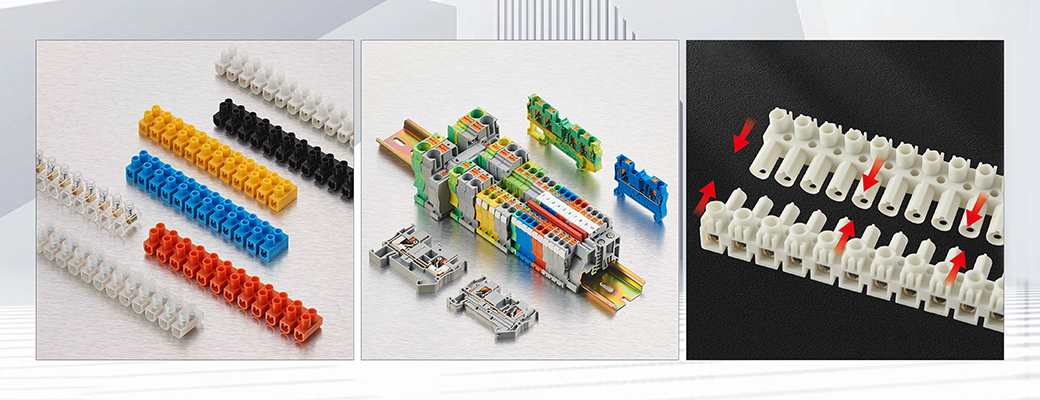
Understanding the Different Types of Terminal Blocks

Before purchasing, it’s important to know which design fits your application. Common types include:

  • Screw Terminal Blocks: The most traditional type, using a screw to clamp the wire. Ideal for high-current applications.
  • Push-In Terminal Blocks: Perfect for tool-free wiring, significantly reducing labor time in large-scale projects.
  • Pluggable Terminal Blocks: Best for systems requiring frequent maintenance or modular connections.

Pro Tip: For high-vibration environments (like railway or heavy machinery), spring-clamp designs are often superior to traditional screw terminals.

Key Technical Specifications to Check

When browsing an independent site or catalog, pay close attention to these three parameters:

Current and Voltage Rating

Always ensure the terminal block can handle at least 120% of the maximum expected current. Overloading a connector is the leading cause of electrical fires.

Wire Gauge (AWG)

Check the compatible wire range. For example, some connectors are designed for solid wires, while others handle stranded wires better.

Pitch (Center-to-Center Distance)

The pitch (e.g., 3.5mm, 5.0mm, or 7.62mm) must match your PCB layout or DIN rail spacing requirements.

Material Quality: Why It Matters for Safety

A high-quality terminal block should feature:

  • Flame-retardant Housing: Look for UL94-V0 rated PA66 materials.

  • Conductive Parts: High-purity copper or brass with tin plating ensures low contact resistance and prevents oxidation.

Common Troubleshooting: Why Do Connectors Fail?

Understanding failures helps in better selection. Most issues arise from:

  1. Loose Connections: Often caused by improper torque on screw terminals.

  2. Corrosion: Using non-plated connectors in humid or salty environments.

  3. Incompatibility: Using the wrong terminal for the specific wire type.

contact person: Ms Snow
Email: [email protected]
online-store

Online Store