
When choosing a wire connector for industrial or commercial applications, many engineers and buyers face the same question:Lever wire connector or push-in connector — which one is better?
Both are widely used in modern electrical systems, replacing traditional screw terminals. But they are not interchangeable. Each has distinct advantages depending on your application, installation environment, and cost considerations.
In this guide, we’ll break down the differences, pros & cons, and best use cases, so you can confidently choose the right connector—and avoid costly mistakes.
What Is a Lever Wire Connector?
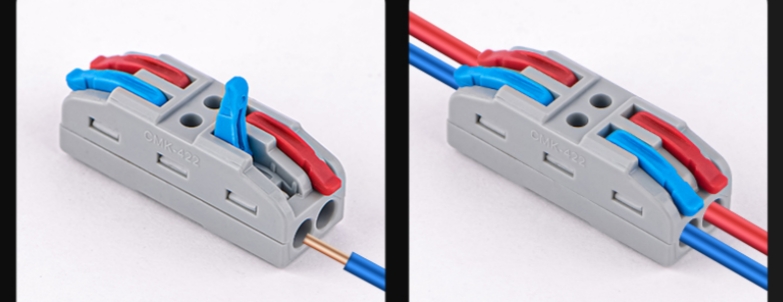
A lever wire connector operates through a manual lever mechanism that allows users to open and close the clamp easily. This design makes it especially suitable for applications where flexibility is required. Because the lever can be reopened without damaging the internal structure, these connectors are highly reusable and ideal for scenarios involving frequent rewiring or system modifications. They also support a wide range of wire types, including both solid and stranded conductors, which makes them a preferred choice in control panels, prototyping environments, and maintenance-heavy systems.
What Is a Push-in Wire Connector?
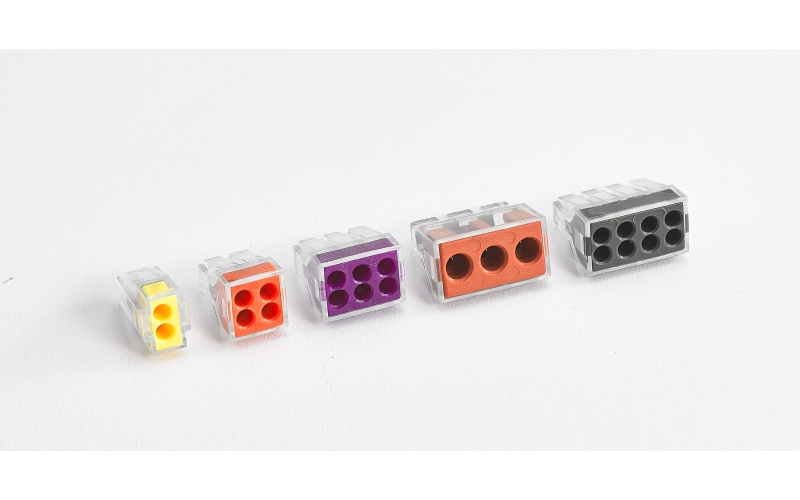
In contrast, a push-in wire connector is designed for speed and simplicity. Wires can be inserted directly into the connector without any additional tools or mechanical action, significantly reducing installation time. This makes push-in connectors particularly effective in high-volume production environments or large-scale installations where efficiency is critical. Their compact size also allows for higher wiring density, making them suitable for junction boxes and applications where space is limited. However, they are generally optimized for solid conductors and are less suitable for stranded wires unless specifically designed for that purpose.
Lever vs Push-in Connector: Key Differences
| Feature | Lever Wire Connector | Push-in Connector |
|---|---|---|
| Installation | Manual lever operation | Push-in only |
| Reusability | Yes | Limited |
| Wire Type | Solid & stranded | Mainly solid |
| Speed | Medium | Very fast |
| Reliability | High | Very high |
| Space Saving | Medium | Excellent |
| Maintenance | Easy | Minimal |
Which One Is Better?
When comparing the two, the most noticeable difference lies in their usability and application focus. Lever connectors prioritize flexibility and adaptability, while push-in connectors are built for speed and consistency. Lever connectors allow for easy inspection and adjustment, which reduces the risk of wiring errors during complex installations. Push-in connectors, on the other hand, offer a maintenance-free solution once installed, minimizing the need for ongoing adjustments and making them ideal for permanent electrical systems.
From a performance perspective, both connector types offer high reliability when used correctly. Lever connectors provide a strong and stable clamping force that is particularly beneficial in dynamic or vibration-prone environments. Push-in connectors also deliver excellent connection stability, especially in fixed installations, but they rely more heavily on proper wire selection to ensure optimal performance. Choosing the wrong wire type for a push-in connector can lead to poor contact or even overheating, which is one of the most common mistakes in electrical installations.
Cost is another important factor to consider. Push-in connectors typically have a lower unit cost and significantly reduce labor time due to their fast installation process. This makes them more economical for large-scale or repetitive projects. Lever connectors, while slightly more expensive upfront, offer long-term value through their reusability and versatility. In projects where modifications or maintenance are expected, they can actually reduce overall costs by eliminating the need for replacement components.
In practical terms, lever wire connectors are better suited for applications that require flexibility, such as industrial automation systems, control panels, and environments where wiring configurations may change over time. Push-in connectors are more appropriate for stable, high-volume applications like building wiring, lighting systems, and OEM manufacturing, where speed and efficiency are the primary concerns.
Ultimately, there is no universal answer to which connector is better, as the decision depends entirely on your specific application. In many cases, experienced engineers choose to use both types strategically within the same project. Lever connectors can be used in areas that require accessibility and adjustment, while push-in connectors can be deployed in sections where fast, permanent connections are needed. This combined approach often delivers the best balance between performance, cost, and installation efficiency.
Look for a reliable wire connector manufacturer
For buyers and project planners, selecting the right connector type is only part of the equation. Working with a reliable manufacturer is equally important to ensure consistent quality and compliance with international standards. A dependable supplier can also provide technical guidance, customization options, and support throughout the project lifecycle, helping you avoid costly errors and improve overall system performance.
If you are currently evaluating wire connector options or looking for a trusted supplier, choosing a partner with proven expertise in lever and push-in connector solutions can make a significant difference. With the right combination of products and technical support, you can optimize your electrical systems for both performance and long-term reliability.


