Home > Why UL94-V0 Rated PA66 is the Gold Standard for Industrial Connectors

In the electrical industry, the choice of insulating material is not just a technical detail—it is a critical safety decision. Among the various engineering plastics available, PA66 (Polyamide 66), especially when it carries a UL94-V0 flammability rating, stands out as the premier choice for high-quality terminal blocks and connectors.

But what exactly makes this material combination the “gold standard”? Let’s dive into the technical advantages that protect both your equipment and your reputation.
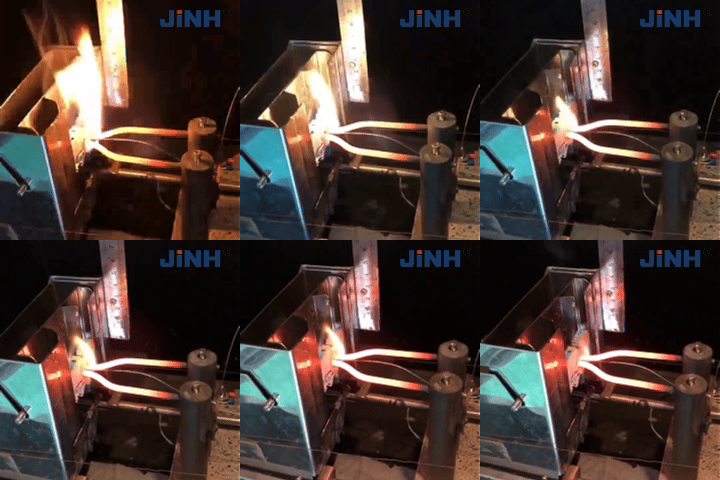
Superior Flame Retardancy: Understanding the V0 Rating

The “V0” in UL94-V0 refers to the strictest vertical burn test standards set by Underwriters Laboratories (UL).

  • How it works: When a flame is applied to a UL94-V0 rated PA66 part, the burning must stop within 10 seconds, and no flaming drips are allowed to ignite the cotton below the sample.

  • The Benefit: In the event of an electrical fault or short circuit, V0-rated materials prevent the housing from becoming fuel for a fire, effectively self-extinguishing and preventing the fire from spreading to the rest of the control panel.

UL94 V0 PA66 flame

The Power of PA66: Beyond Fire Resistance

PA66, commonly known as Nylon 66, is chosen for industrial applications not just for its chemistry, but for its mechanical resilience.

  • High Heat Resistance: PA66 can maintain its structural integrity at high continuous operating temperatures. This is vital for connectors that carry high currents and generate heat.

  • Mechanical Strength: Unlike cheaper plastics, PA66 is tough and resistant to impact. It won’t crack or become brittle during installation or when subjected to industrial vibrations.

  • Chemical Stability: In factory environments where oil, grease, or cleaning agents are present, PA66 offers excellent chemical resistance, ensuring a long service life without degradation.

Safety Compliance for Global Markets

For B2B buyers exporting products to Europe and North America, compliance is non-negotiable.

Using UL94-V0 rated PA66 ensures your components meet international safety standards such as IEC 60947 and UL 1059. This simplifies the certification process for your entire machine or system, reducing time-to-market and legal risks.

Long-term Cost Efficiency

While PA66 V0 materials may have a higher initial cost than V2 or standard ABS plastics, they offer a much lower Total Cost of Ownership (TCO):

  1. Lower Maintenance: Fewer replacements due to heat aging or mechanical wear.

  2. Insurance Compliance: Many industrial facilities require V0-rated components to satisfy fire insurance policies.

  3. Brand Protection: Avoiding a single fire incident saves millions in potential liability and brand damage.

Conclusion

At JINH, we prioritize safety above all else. That is why our core product lines—including our terminal blocks and heavy-duty connectors—utilize premium UL94-V0 rated PA66. We believe that high-performance engineering starts with high-performance materials.

Looking for reliable, fire-resistant electrical components for your next project? Contact us

Why is UL94-V0 rated PA66 preferred for electrical connectors?

UL94-V0 is the highest fire safety rating for plastic materials. PA66 with this rating will self-extinguish within 10 seconds and will not produce flaming drips. In industrial electrical applications, this prevents a localized short circuit from turning into a major fire, ensuring the safety of the entire control system.

What are the main differences between PA66 and ABS in terminal blocks?

The primary differences are heat resistance and mechanical strength. PA66 has a melting point of approximately 260°C, whereas ABS softens at around 105°C. PA66 is much tougher and more resistant to the chemicals and vibrations found in industrial environments, making it more reliable for long-term use than ABS.

Can PVC be used as an alternative to PA66 for high-voltage applications?

No, it is not recommended. While PVC is a good insulator at room temperature, it has low thermal stability and releases toxic, corrosive gases (like hydrogen chloride) when heated or burned. PA66 offers superior insulation, higher mechanical durability, and is much safer for high-performance and high-voltage electrical connections.

How does PA66 handle extreme temperatures in industrial settings?

PA66 (Nylon 66) maintains its structural integrity and electrical insulation properties across a wide temperature range. Its high heat deflection temperature allows it to withstand the internal heat generated by high-current terminal blocks without deforming or losing its grip on the wires.

Is PA66 material environmentally friendly?

Yes, modern industrial-grade PA66 can be produced in halogen-free versions, complying with RoHS and REACH regulations. This ensures that the components are safe for both the environment and the workers handling them, unlike some older PVC or flame-retardant plastics that contain harmful chemicals.

contact person: Ms Snow
Email: [email protected]
online-store

Online Store