
Choosing the right electrical connector is no longer just a technical decision—it directly impacts installation speed, labor costs, and long-term system reliability.
This guide is designed to help you make the right choice. By understanding the different types of quick wire connectors, their applications, and the key factors to consider during selection, you can confidently choose a solution that meets your project requirements—while reducing installation time, minimizing errors, and ensuring long-term reliability.
What Is a Quick Wire Connector?
When choosing the right wire connector, understanding its basics is crucial. A Quick Wire Connector is a type of electrical connector designed to join wires quickly and securely without the need for traditional tools such as screwdrivers or crimping devices. It uses an internal spring clamp or lever mechanism to hold the conductor firmly in place, ensuring a stable electrical connection with minimal effort.
Compared to traditional terminal blocks that require manual tightening and can loosen over time, Quick Wire Connectors provide a stable connection. Their convenience avoids the risks of poor contact, overheating, or connection failure caused by inexperienced manual operation, especially in environments requiring frequent maintenance or subject to vibration.
Most Quick Wire Connectors on the market currently operate on two principles:
- Push-in type: The wire is inserted directly into the connector, where a spring mechanism automatically locks it in place. This type is ideal for solid wires and high-speed installations.
- Lever type: A small lever is lifted to open the clamp, allowing the wire to be inserted, then closes to secure the connection. This design supports both solid and stranded wires and is reusable.
Because Quick Wire Connectors can be installed without tools, installation time is reduced from minutes to seconds, making them particularly useful in industrial automation, distribution panels, lighting systems, and building wiring projects.
In short, a quick wire connector is a fast, reliable, and user-friendly solution that simplifies electrical connections while improving safety and efficiency
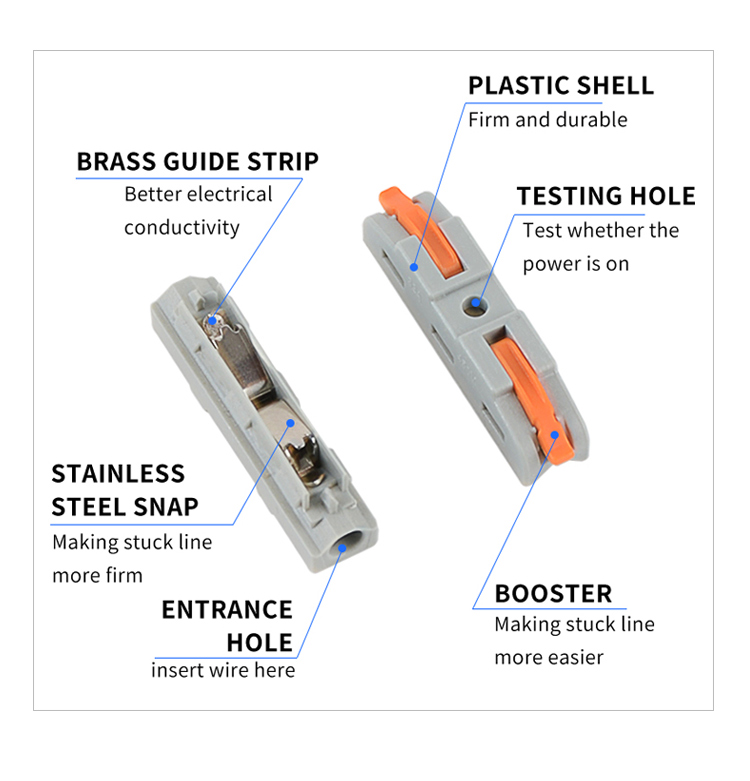
Types of Quick Wire Connectors
1.Push-in Wire Connectors
The installation of push-in wire connectors is remarkably fast; wiring can be completed simply and quickly by merely inserting a stripped wire into the connector. No tools are required for assistance, and the demands placed on the installer are minimal.
Internally, push-in wire connectors feature spring clamps that provide a secure connection force, thereby effectively minimizing wiring errors caused by human factors. Furthermore, their compact structure makes them ideal for use in confined spaces.
Push-in wire connectors are typically used for connecting solid-core wires and are generally not suitable for stranded flexible wires. Since extracting a wire can be somewhat difficult, these connectors are best suited for applications requiring a one-time connection that does not necessitate frequent modifications—such as in lighting systems, large-scale wiring projects, and residential or commercial electrical installations.
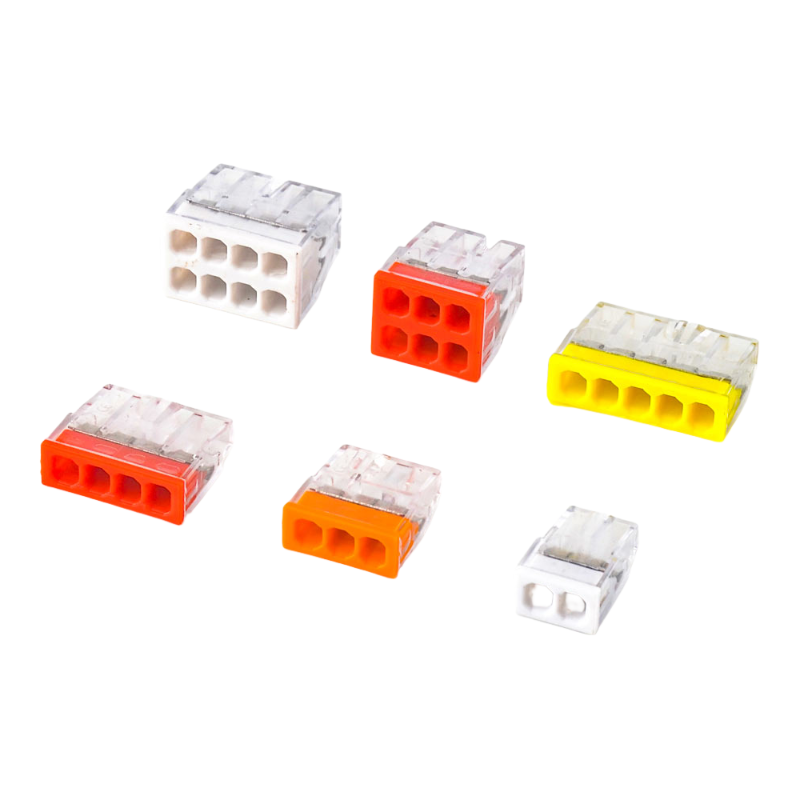
2.Lever Wire Connectors
Lever wire connectors operate on the principle of using a lever mechanism to establish a connection, featuring a reusable locking mechanism. They offer broader compatibility than push-in wire connectors, accommodating both solid and stranded wires. These connectors are commonly used to extend existing circuits or to make quick wire connections.Transparent lever wire connectors make your wiring process visible, making them highly suitable for maintenance and troubleshooting tasks.
Lever wire connectors are slightly more expensive than push-in wire connectors; however, they offer exceptional wiring flexibility and allow for rapid disconnection during maintenance. Consequently, they are well-suited for applications requiring flexible wiring—such as internal control cabinet wiring, PLC system connections, and electrical connections for equipment.。
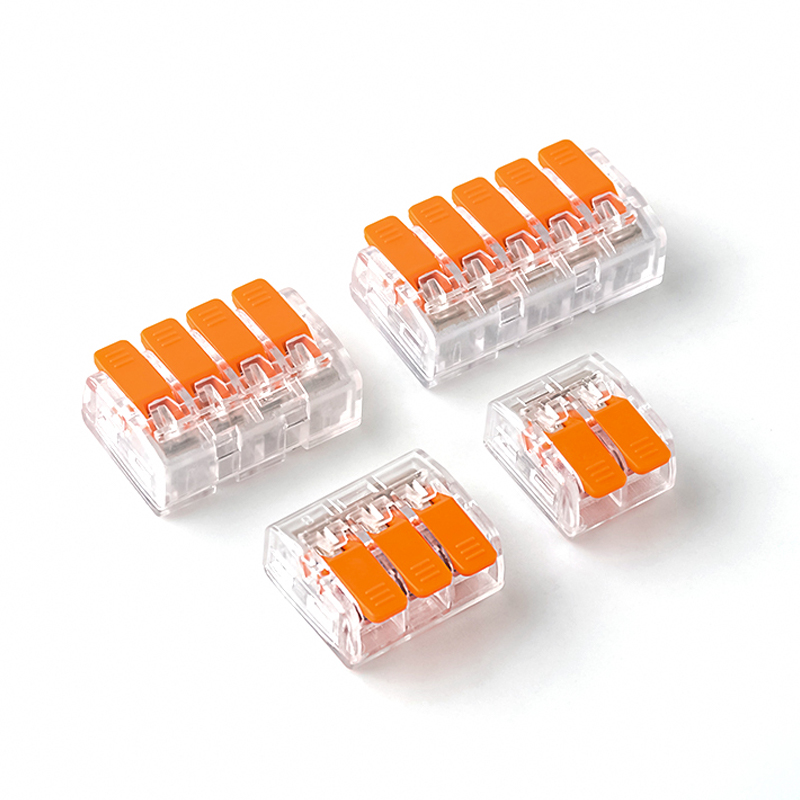
3.Compact Wire Connectors
Compact wire connectors are designed for use in confined spaces and are suitable for narrow installation environments. Due to their design, the wiring capacity of certain models is limited. They are typically utilized in control cabinets, compact electrical equipment, and installation scenarios where space is restricted.
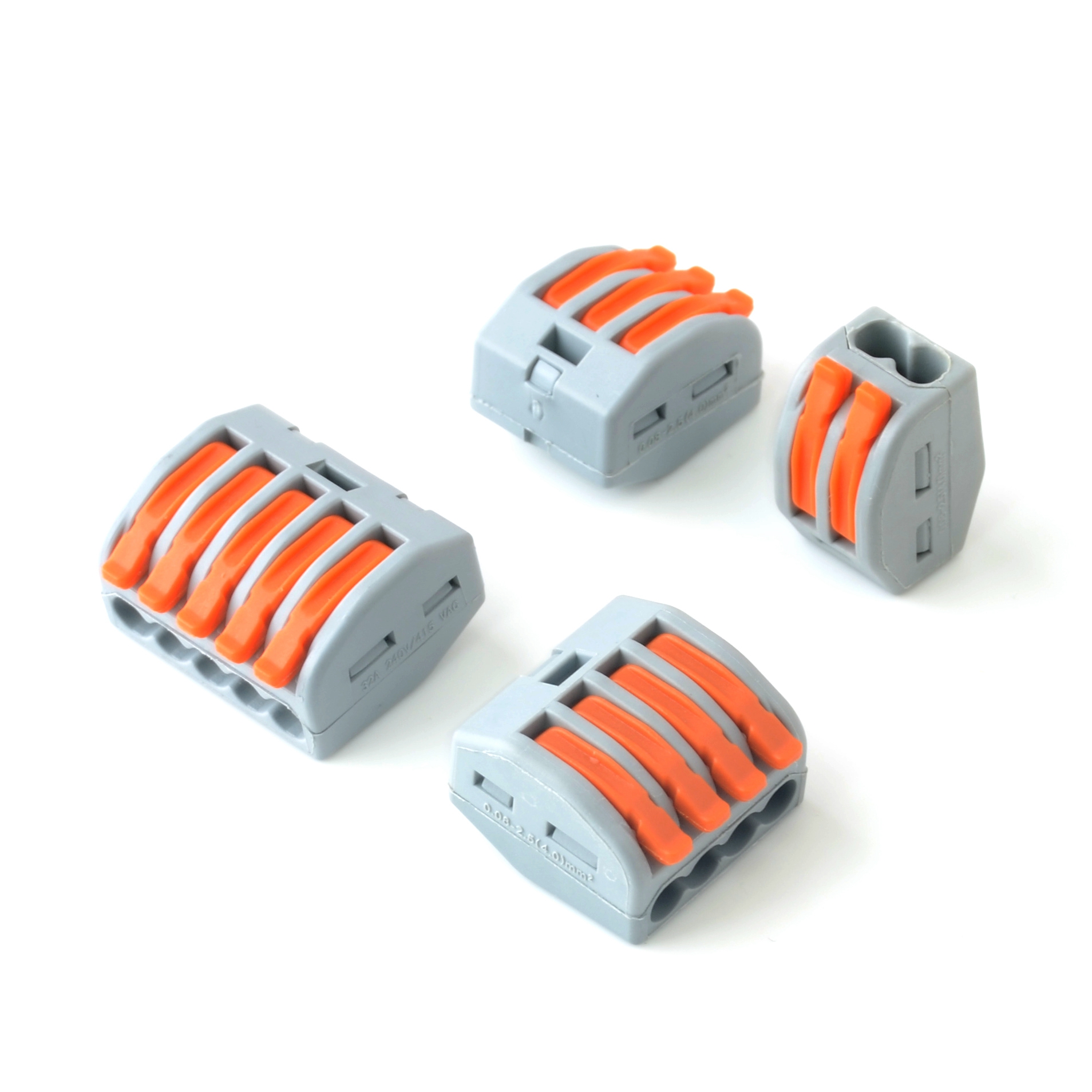
4.Multi-port Connectors
Multi-port connectors enable the connection of multiple wires to a single unit; their use for your project significantly reduces wiring complexity, saves installation time, and ensures a neat and organized wiring layout. However, due to their larger physical size compared to single-port connectors, they may limit flexibility once installed and may not be suitable for all wiring configurations. They are typically utilized in lighting distribution systems, junction boxes, parallel wiring setups, and building electrical systems.
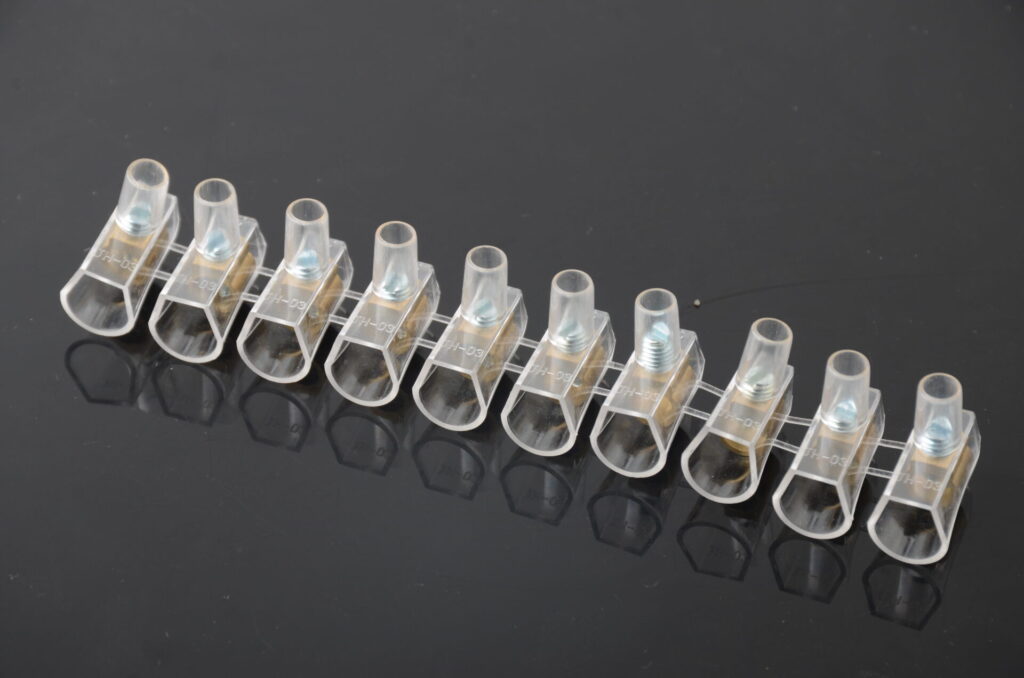
5.Pluggable Wire Connectors
Pluggable wire connectors offer you an effortless and convenient connection experience; their unique design facilitates simple plug-and-unplug operations, thereby significantly enhancing the overall efficiency of your projects during both the installation and subsequent maintenance phases. These connectors are particularly well-suited for modular systems, effectively streamlining associated maintenance and replacement procedures.
Although the unit cost may be higher, from a long-term operational perspective, these connectors substantially reduce future maintenance expenses. Consequently, they are highly recommended for applications such as industrial control systems, power distribution units, and other equipment that requires frequent component replacement.
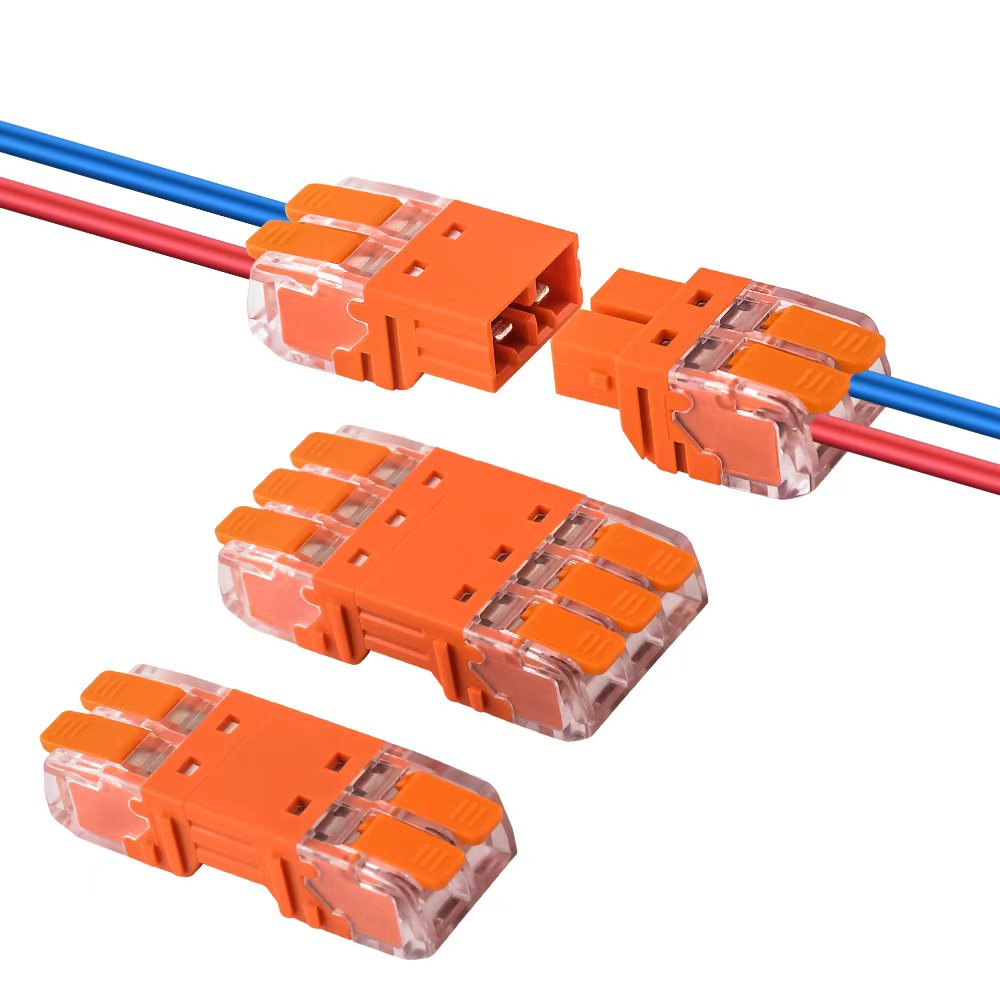
6.IDC(Insulation Displacement) Wire Connectors
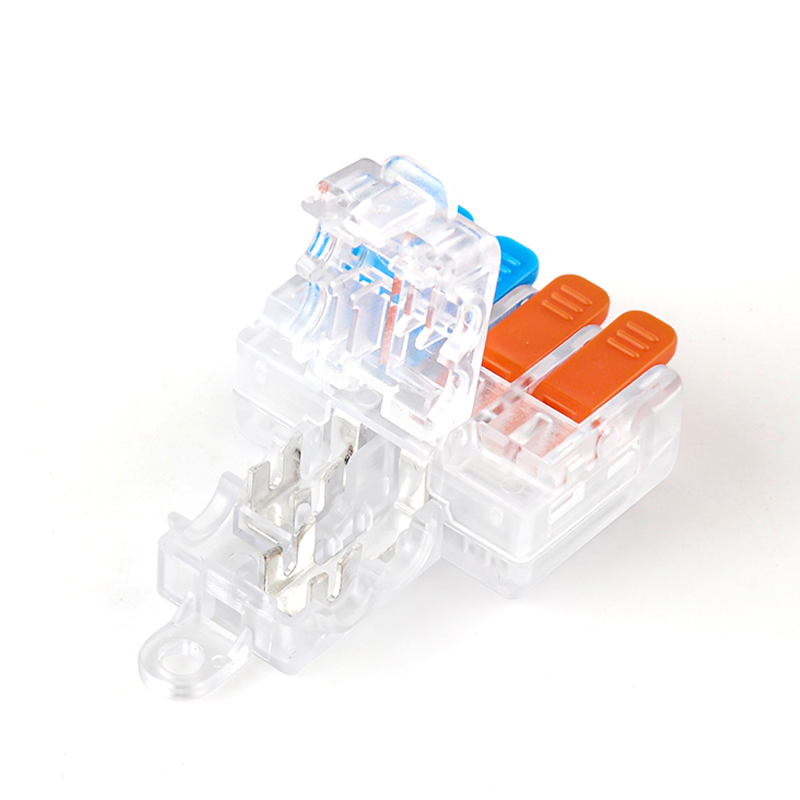
The working principle of IDC (Insulation-Displacement Connector) wire connectors involves using sharp teeth or blades to pierce through the insulation layer of a flat cable, thereby making contact with the internal conductors. This establishes a secure and reliable electrical connection between the cable and the connector, allowing you to wire your project without the need to strip the insulation from the wires. However, this method is limited to specific wire types and specifications; the connectors are not easily reusable, and precise alignment and insertion are required to ensure a stable connection.
Applications of Quick Wire Connectors
Quick wire connectors are widely used across various industries where fast, reliable, and safe electrical connections are essential. Their tool-free design and consistent performance make them especially valuable in projects that demand high efficiency and low maintenance.
Industrial Automation
In industrial automation systems, wiring speed and reliability are critical. Quick wire connectors help reduce installation time during machine assembly while ensuring stable connections under vibration and continuous operation.
They are commonly used in:
- PLC systems
- Control panels
- Sensor and actuator wiring
For environments with frequent maintenance or upgrades, lever-type connectors are often preferred due to their reusability.
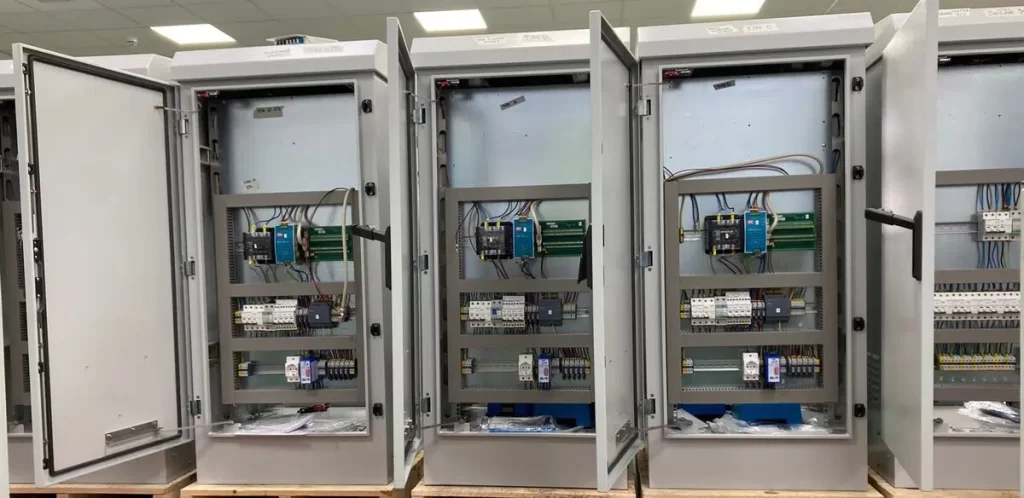
Electrical Panels & Control Cabinets
Electrical panels require organized, space-efficient, and secure wiring. Quick wire connectors simplify complex wiring layouts and reduce the risk of loose connections.
Benefits in this scenario include:
- Faster panel assembly
- Cleaner wiring layout
- Easier troubleshooting and replacement
Compact and multi-port connectors are particularly suitable for high-density cabinet wiring.
Lighting Systems
Lighting installations—especially in commercial and residential projects—often involve repetitive wiring tasks. Quick wire connectors significantly improve installation efficiency and consistency.
Typical uses:
- LED lighting systems
- Ceiling and junction box connections
- Smart lighting installations
Push-in connectors are ideal for solid wires and high-volume lighting setups.
Building & Construction Electrical Systems
In building wiring, electricians need solutions that are fast, safe, and compliant with regulations. Quick wire connectors reduce labor intensity while maintaining reliable performance.
Common applications:
- Power distribution in buildings
- Junction boxes
- Socket and switch connections
Certified connectors (UL, CE) are essential for meeting regional electrical standards.
Home Appliances
Modern appliances require compact and reliable internal wiring solutions. Quick wire connectors provide secure connections while optimizing space and simplifying assembly.
Used in:
- Washing machines
- Refrigerators
- Air conditioning units
Compact connectors are preferred for space-limited internal designs.
Maintenance & Retrofit Projects
For maintenance teams and retrofit projects, ease of use and reusability are key. Quick wire connectors allow fast disconnection and reconnection, reducing downtime and labor costs.
Ideal for:
- System upgrades
- Equipment replacement
- On-site repairs
Lever connectors are especially useful in applications requiring frequent changes or inspections.
In summary, quick wire connectors are not limited to a single use case—they are a versatile solution across industrial, commercial, and residential applications. Choosing the right type for your specific environment can significantly improve installation efficiency, reduce errors, and ensure long-term reliability.
Key Factors to Consider
Buyer’s Checklist: How to Choose the Right Connector
1.Wire Type & Size
Will the connector fit your wire type and size?
Choosing the wrong wire range is one of the most common mistakes in electrical installations. A connector that is too loose can lead to poor contact, overheating, or even system failure.
To ensure a secure and stable connection, always verify:
- Wire type: solid, stranded, or flexible
- Wire size range: typically defined in AWG or mm²
For industrial applications, it’s recommended to select connectors with a wider compatibility range to avoid mismatch issues during installation.
High-quality quick wire connectors are designed to support both solid and stranded wires, ensuring flexibility across different applications.
2.Current & Voltage Rating
Will the connector match your current and voltage?
Choosing the appropriate current and voltage for your project is crucial for safety. Exceeding the product’s maximum current and voltage will inevitably damage the product and, in severe cases, may cause a fire.
To avoid such situations, we recommend that you use a current and voltage that do not exceed 70% of the product’s maximum rated current and voltage to ensure the safe operation of the equipment.
3.Connection Type
Will the connector type be suitable for your project?
Each type of connector corresponds to a different wiring method. Choosing the most suitable connector for your project can save you a lot of time and increase efficiency by 80%.
- Push-in Wire Connectors:If you’re looking for efficiency, look for it.
- Lever Wire Connectors:If you need frequent maintenance, look for it.
- Compact Wire Connectors:If you have limited space, look for it.
- Multi-port Connectors:If the wiring is very complex, look for it.
- Pluggable Wire Connectors:If you need to frequently disconnect the power, please choose this option to avoid damaging the wiring.
- IDC Wire Connectors:Parallel connection without wire stripping, look for it.
4.Application Environment
Will the connector be suitable for your project environment?
Vibration, temperature, and humidity are various complex scenarios encountered in electrical installations. For a safe and stable connection in these environments,
to ensure a secure and stable connection, please confirm:
- Quick wire connector anti-loosening design
- Quick wire connector operating temperature
- Quick wire connector waterproof rating
Please confirm whether these specifications meet the requirements of your project.
5.Safety & Certifications
Will the connector be exported to various countries?
If you want to export Quick Wire Connectors to other countries, the required certifications vary from country to country; you need to check the local regulations. For example, the United States requires UL certification, while Europe requires CE certification.
This is very important and cannot be overlooked.
6.Reusability & Maintenance
Will the connectors be intended for long-term use?
The design of the quick wire connector makes the originally messy wire arrangement clearer and easier to troubleshoot during later maintenance, improving efficiency, reducing downtime, and significantly reducing project operating costs in the long run.


